Evidence-First AI
Workspaces for Healthcare & Life Sciences
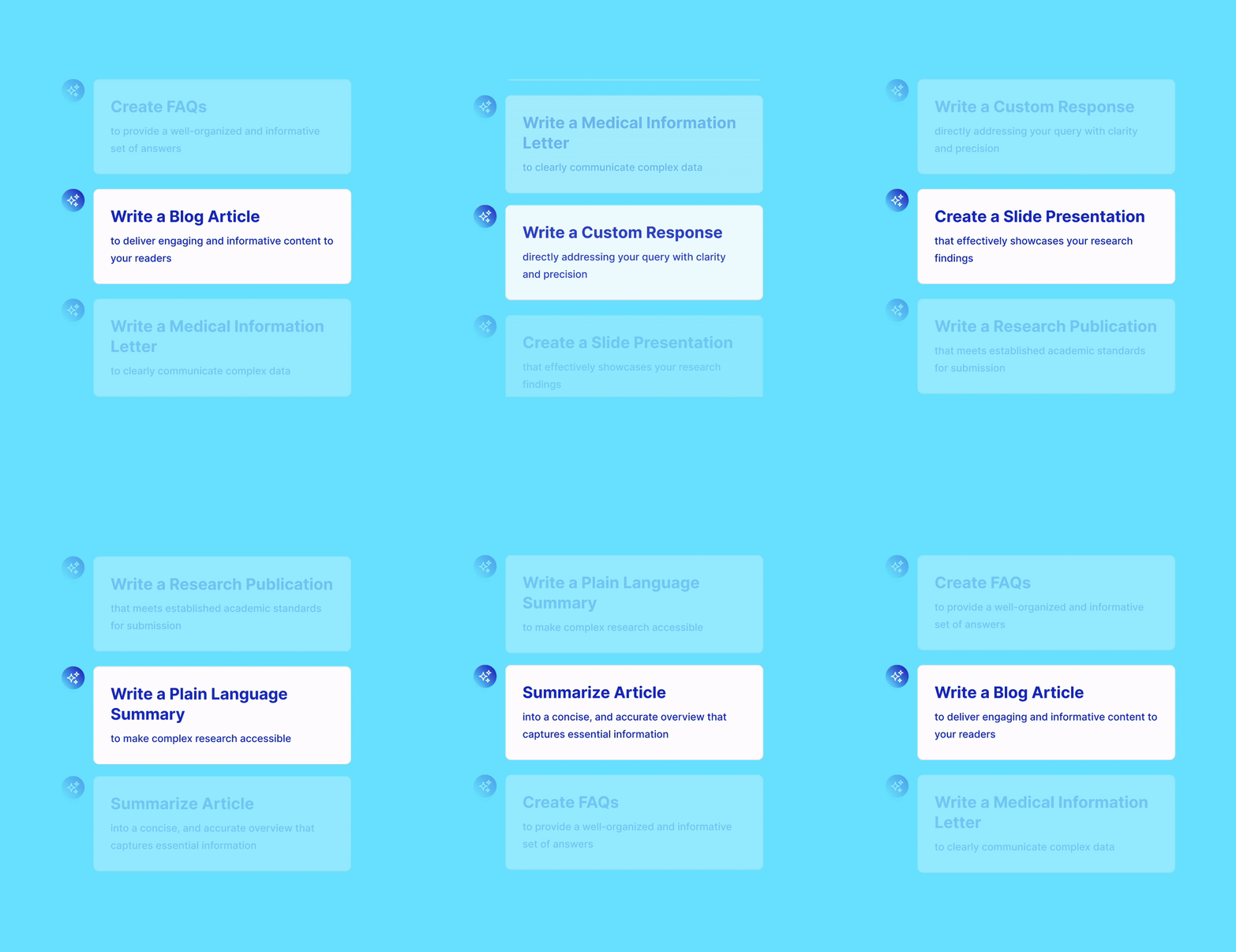
Integrated AI platforms that help healthcare, pharmaceutical, biotech, and research teams search evidence, generate scientific content, and streamline complex workflows securely.
Explore MACg
Why Evidence-First AI
Trusted scientific evidence. Smarter AI.
General-purpose AI generates responses from what it has learned. Evidence-First AI helps healthcare and life sciences professionals create content grounded in trusted scientific evidence—improving transparency, traceability, and confidence.
AI is only as trustworthy as the evidence behind it.
- Trusted Evidence – Work from PubMed, peer-reviewed literature, and your organization's knowledge.
- Purpose-Built for Science – Designed for healthcare and life sciences workflows.
- Transparent & Traceable – Keep references connected to the content you create.
Our Flagship Product
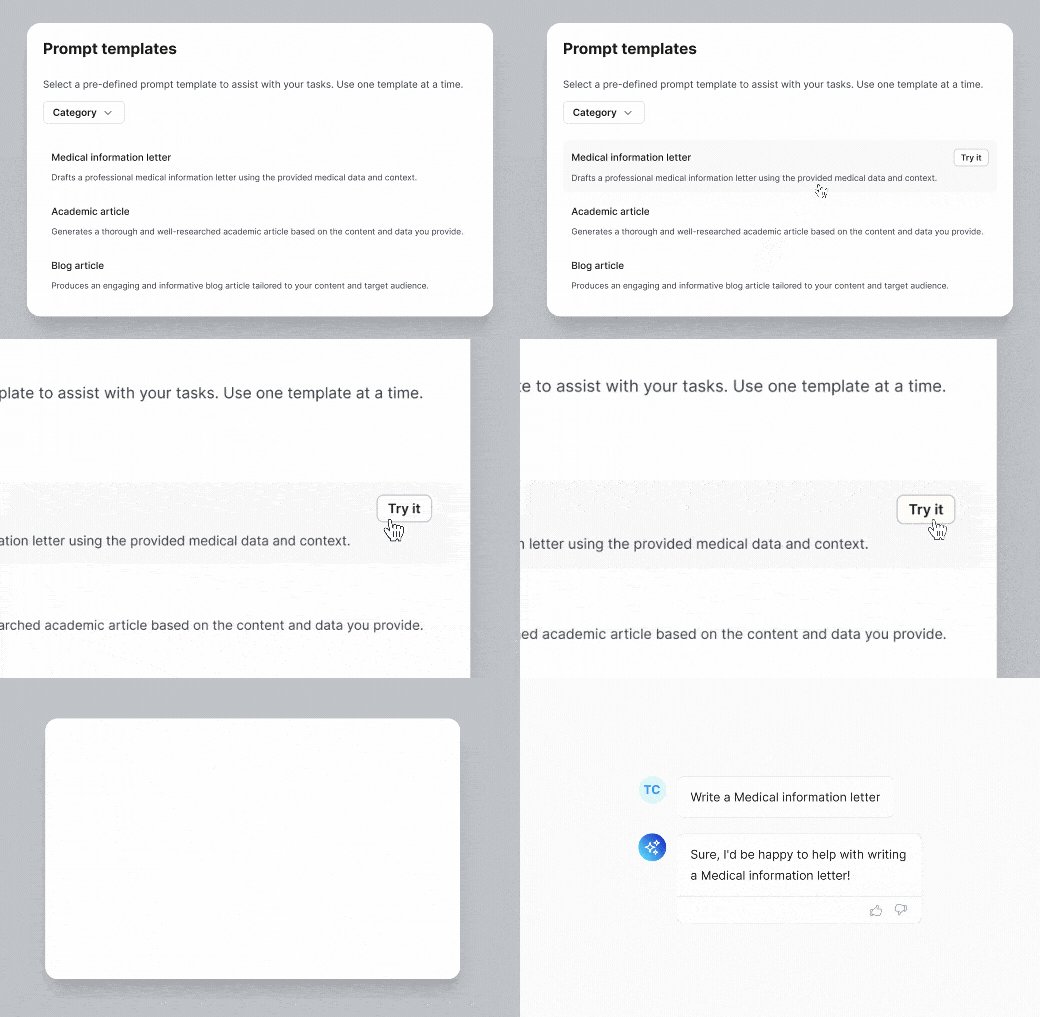
MACg — Evidence-First AI Workspace for Healthcare & Life Sciences

AINGENS Supports
Scientific and Medical Workflows
Medical Writers & Independent Consultants

Streamline research, writing, and content development with AI for scientific workflows.
Pharma & Biotech Teams

Scale evidence-based content creation across medical affairs, publications, and scientific teams.
Researchers & Clinical Teams

Accelerate literature review, scientific writing, presentation development, and clinical decisions.
Medical Communications Agencies

Increase content capacity, improve consistency, and deliver high-quality scientific materials faster for your clients.
With MACg’s ability to integrate PubMed references directly into documents, that challenge becomes effortless. It’s more than just an AI tool—it’s an innovative platform that empowers medical writers and communicators to work smarter, not harder.

MACg by AINGENS is a next-step technology in life science content generation. From formatting grammar to complex medical/clinical summaries, I found the MACg system to be trustworthy. It is exciting to see the progression of AI in this application and the potential benefits, time savings, accuracy, and creativity, all realized in MACg.

Previously, I relied on EndNote for citation generation, but MACg takes it further by allowing me to pull, cite, store, and manage references all in one platform seamlessly integrated with PubMed. It is designed with medical writers in mind—helping gather information, providing detailed scientific prompts, suggesting and finding relevant references, retaining links, and summarizing content—all within the same dedicated workspace. On top of that, the in-built editor makes refining content simple and efficient.

I used to spend HOURS researching a single article. Drowning in PubMed rabbit holes, juggling 15+ tabs for every project, switching between multiple Google Docs and getting lost in the process. It was beyond exhausting. I was skeptical about using AI in my process after too many garbage outputs, but I gave MACg a shot anyway. I needed an article on ADHD and nutrition, so I said, “why not?”. Within minutes, I had solid research and a pretty solid first draft. After a few quick iterations, my article was publication-ready. Time savings = unmatched. What ultimately sold me: I was able to do everything in one spot…research, prompting, drafting, writing/revisions. No more 15+ tabs for one project. (and a lot fewer headaches) If you want to drastically cut your time and get quality outputs fast, try MACg.

Ready to Experience Evidence-First AI?