How CME Writers Can Use AI Responsibly Without Losing Their Critical Role
Generative AI is reshaping continuing medical education (CME) writing, but it won't replace medical writers—it will empower those who learn to use it as a collaborative partner. AI excels at summarizing literature, structuring content, and sparking creative ideas, yet it lacks the judgment, ethical reasoning, and contextual insight required for high‑stakes medical education. Human writers remain essential for accuracy, compliance, bias detection, and learner-centered design. Tools like MACg, built specifically for medical writers, model responsible human–AI collaboration by securing data, integrating PubMed, managing citations, and lightening mechanical tasks so writers can focus on synthesis, equity, and meaningful engagement.
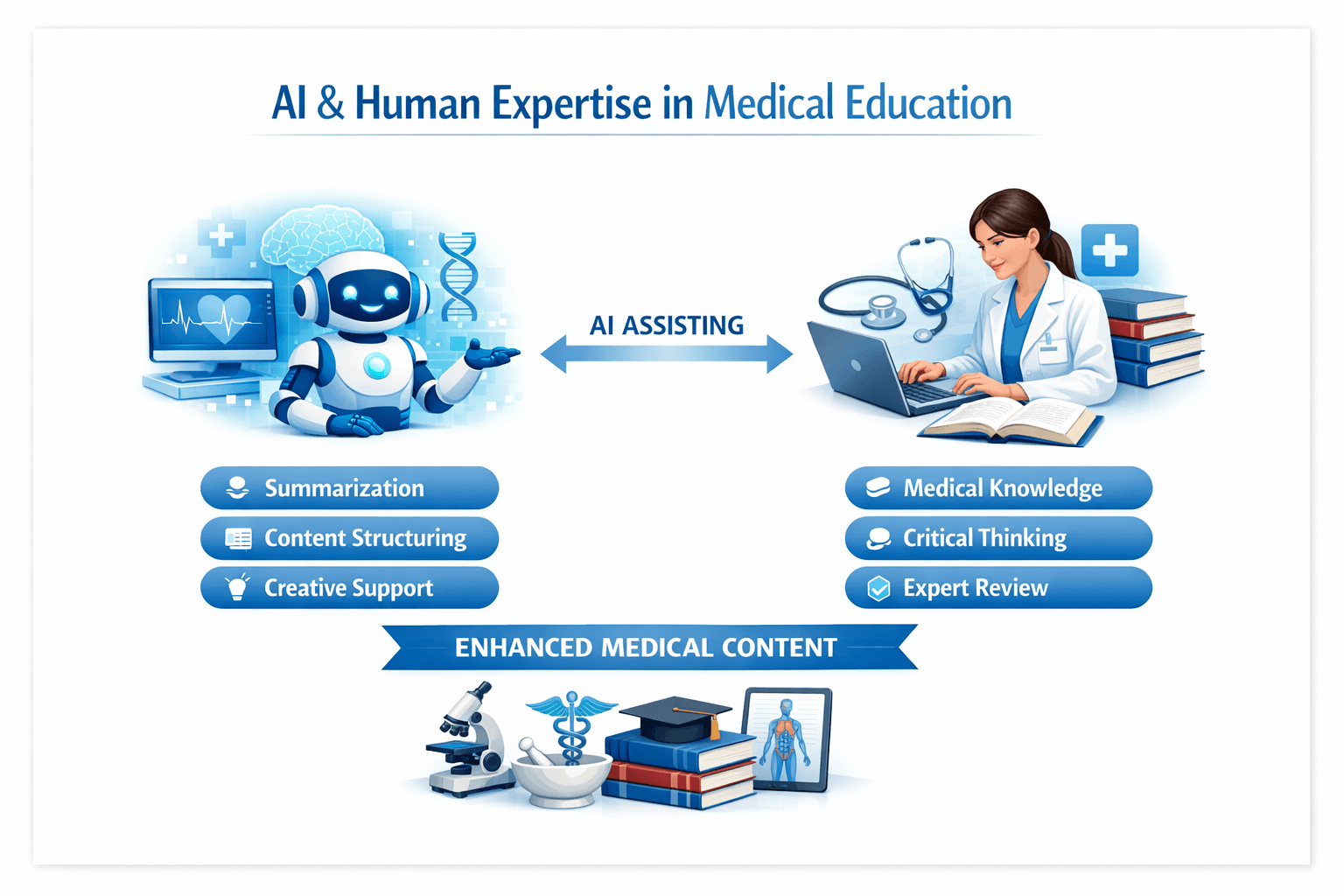
AI as a Collaborative Partner in CME Writing: Why Human Expertise Still Matters
Will AI take my job?
It’s a question I hear often from medical writers, especially those of us working in continuing medical education (CME). The explosion of generative AI since late 2022 has brought both enthusiasm and unease into the world of professional medical writing. While some writers fear being replaced by machines, others are experimenting with AI as a way to streamline workflows, speed up research, and banish the dread of the blank page.
Here’s what seems likely: AI will not replace CME writers. But CME writers who learn to collaborate with AI will be better positioned to succeed.
In this blog, we reframe AI as a collaborative partner rather than as a competitor. We see AI as a tool that can accelerate mechanical tasks while leaving the complex, human work of judgment, ethics, and creativity where it belongs: with you.
The Myth of Replacement vs. the Reality of Collaboration
Let’s start with a distinction:
- Myth: AI will make medical writers obsolete.
- Reality: AI is a tool—powerful, yes, but lacking judgment, nuance, and contextual insight.
In CME for instance, we do not simply string words together. We generate insights from evidence, identify clinical practice gaps, align with adult learning principles, and ensure compliance with strict accreditation standards. AI can draft sentences, but it can’t determine whether those sentences are accurate, balanced, or truly useful for busy healthcare professionals (HCPs).
As medical writer and AI consultant Núria Negrão notes, AI models can be a great collaborator. They surface perspectives we might not have considered, given their vast training on broad data and sources of information. But they are also prone to errors, hallucinations, and bias. That’s why the human writer is irreplaceable.
Your expertise ensures that CME content isn’t just generated, but that it’s interpreted, validated, and tailored to meet the real needs of HCPs.
3 Ways to Use AI Responsibly in CME Writing
1. Keep Humans in the Loop
AI can summarize, outline, and suggest. But only you can verify accuracy, ensure compliance, and shape content around learner needs. Treat AI as scaffolding, not a finished product.
2. Protect Data & Privacy
Never upload client-owned or proprietary materials into platforms that train on user data. Use secure tools (like MACg) that safeguard information and avoid third-party sharing.
3. Check for Bias & Balance
AI reflects the limitations of its training data, which is often Western, English, and male-dominated. Make deliberate editorial choices to highlight diversity, equity, and inclusion, and to ensure fair balance across therapies.
What AI Does Well (and Why It’s Useful)
So what role does AI play in a CME writer’s toolkit? In my work and in conversations with colleagues, I see consistent benefits in three areas:
Summarization and Distillation. AI can scan dense journal articles, white papers, or clinical guidelines and pull out key points in minutes. This capacity helps writers quickly identify areas of focus without wading through hundreds of pages.
Structuring and Outlining. Struggling with a blank page? AI can suggest logical content flows that align with educational objectives. Think of this task as scaffolding: you still design the structure, but AI can offer a starting framework.
Creative Support. AI can generate case study arcs, plain-language rewrites, or even prompts for reflective questions. These outputs aren’t finished products (although they are getting closer), but they often spark new directions you might not have considered.
As Negrão reminds us, AI works best when you break large projects into smaller, well-scoped tasks. To this end, it’s prudent to note that prompting strategies are evolving. A recent article in the ACEHP Almanac described the “Goal → Return Format → Warnings → Content Dump” model as a way to improve prompt effectiveness. Don’t ask AI tools to “write a needs assessment.” Instead, be specific. Ask your tool to summarize five PDFs or suggest learning objectives from identified gaps. The secret is knowing your process and guiding AI step by step.
Where AI Falls Short (and Why Writers Are Essential)
For all its promise, AI brings risks that make human oversight non-negotiable.
Accuracy. As we know, AI tools can generate convincing but fabricated content. In medicine and healthcare, misinformation isn’t just embarrassing, it can be dangerous. Source and fact-checking remains a writer’s core responsibility.
Bias and Representation. AI models are trained on existing content, much of it Western and English-dominant. This means they reproduce and even amplify existing biases. Medical writers must consciously ensure equity and inclusivity in education and clinical materials.
Homogenization. If everyone uses the same tools and prompts, we risk churning out generic, formulaic content. This is where your voice, insight, and creativity matter most. Distinctive, engaging CME depends on the human touch.
Ethical and Legal Concerns. Questions about copyright, transparency, and data privacy remain unresolved on many AI platforms. Medical writers need to be vigilant: Are you uploading client-owned materials without consent? Are you transparent about your use of AI? Do you follow your employer or client’s policies on AI use?
This is why I advocate for what Stephanie Preuss, Director of Content Innovation at Springer Nature calls a “human handshake” approach: AI can accelerate productivity, but humans must verify, refine, and ensure content integrity.
Bias in AI: What CME Writers Need to Know
AI is only as good as the data it’s trained on.
Dr. Immani Shephard, Director of Medical Education and Social Scientific Research at the University of Illinois, cautions that when biased data goes in, biased outputs come out—and in healthcare, that can mean inequitable outcomes.
- Real-world example: The GFR (glomerular filtration rate) algorithm was initially based on the flawed assumption that African Americans have inherently higher GFR levels due to greater muscle mass. This bias resulted in delayed interventions, prolonged dialysis, and reduced transplant opportunities for this population.
- Bias amplification: Human-AI “feedback loops” can magnify errors. AI reflects and reinforces existing prejudices, and because people often see AI as “objective,” they may be more likely to trust biased outputs.
- Risks in CME: If AI over-associates conditions with certain demographics, it can skew both educational content and clinical decision-making.
What writers and educators can do:
- Question AI outputs and spot potential bias.
- Emphasize that AI should augment, not replace human judgment.
- Build in reflection points around equity, data accuracy, and social determinants of health.
MACg: A Model for Human–AI Collaboration
With dozens of AI platforms competing for attention, how do you choose tools that align with the values and demands of CME?
This is where MACg (Medical Affairs Content Generator) stands out. Unlike general-purpose tools like ChatGPT, MACg was designed with medical writers in mind. Its strengths include:
- Document Analysis and Summarization: Quickly extract data from journal articles or clinical guidelines.
- PubMed Integration: Seamlessly retrieve and cite peer-reviewed literature without toggling between platforms.
- Citation Management: Build AMA-compliant bibliographies with “Cite While You Write” functionality.
- Data Security: MACg does not train on user data or share prompts with third parties—a critical safeguard for writers handling proprietary content.
- Content Structuring and Visualization: Generate outlines, tables, and charts within the same workspace.
What strikes me about MACg is that it doesn’t actually try to be your replacement. Instead, it’s built to lighten the mechanical load by summarizing, organizing, and formatting. As a result, you can focus on higher-level tasks like synthesis, interpretation, and learner engagement.
The Future of CME Writing: Human + AI Synergy
Looking ahead, it seems likely the most successful medical writers will be those who embrace human–AI synergy. AI will handle the mechanics by accelerating early-stage research, content structuring, and draft iteration. We will continue to provide the meaning, because we bring context, ethics, creativity, and critical thinking that AI cannot replicate.
In CME this could mean:
- Using AI to jumpstart needs assessments but relying on your expertise to articulate precise practice gaps.
- Asking AI to propose patient cases, then customizing them with clinical nuance.
- Leveraging AI to flag bias, but making deliberate editorial choices to ensure diversity and fair balance.
The key is knowing your process, breaking down tasks, and giving AI as much context as you would give a human collaborator.
Final Thoughts: Reframing the Conversation
AI is not the end of medical writing. It’s the beginning of a new phase, one where writers who experiment thoughtfully will have an edge. For me, the most exciting potential lies in how AI can free CME writers to focus on what really matters: crafting compelling narratives, engaging learners, and addressing the real challenges clinicians face in practice.
So instead of asking, “Will AI replace me?” the more valuable question is: “How can I partner with AI to elevate my work and better serve learners?”
MACg offers a thoughtful answer. With its focus on the core tasks medical writers perform daily, and its safeguards around data and compliance, it represents the kind of collaborative AI we can responsibly embrace.
If you’re curious, explore MACg’s 14-day free trial. Experiment with how it integrates into your workflow. And share your experiences, because the more we learn together, the stronger we’ll become as a community of writers navigating this new frontier.
From Evidence to Publication-Ready Content—Faster
MACg brings research, writing, citations, visuals, and presentations together in one Evidence-First AI workspace.
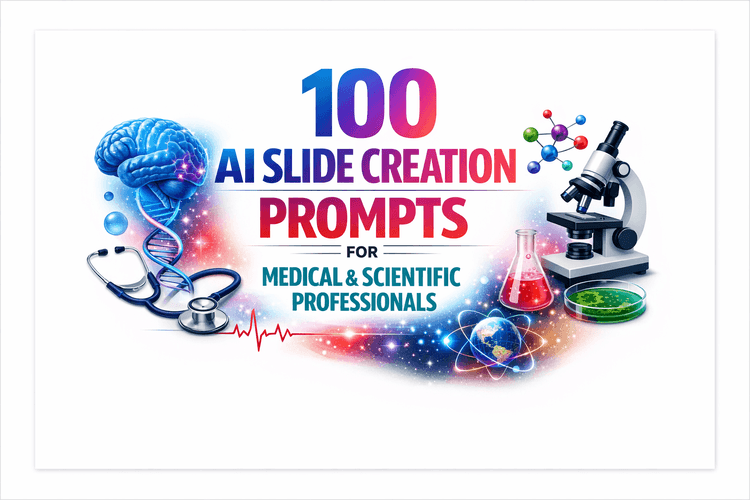
100 AI Slide Presentation Prompts for Busy Medical and Scientific Professionals
This article provides 100 ready‑to‑use AI prompts to help medical and scientific professionals create high‑quality slide presentations with MACg. The prompts are organized into practical categories, including clinical education, drug and mechanism‑of‑action decks, PubMed‑driven evidence reviews, specialty teaching, medical affairs and HEOR, training and curriculum, data‑visualization, and conference or grant presentations. Each prompt uses clear “Instruction:” wording and customizable placeholders (e.g., [condition], [audience], [timeframe]) so users can quickly adapt them to their specific topic and setting. By removing blank‑slide paralysis, the collection speeds up evidence‑based slide creation while supporting consistent, structured, and compliant communication.

Feb 4, 2026
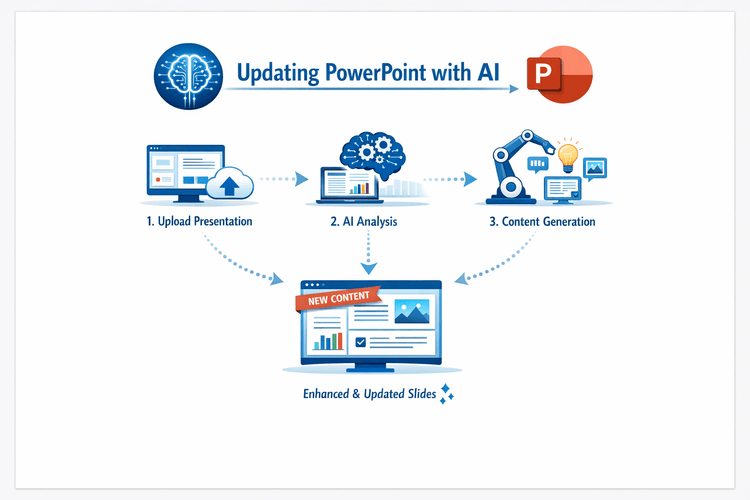
How to Use AI to Update PowerPoint Presentations (Step-by-Step Guide for Faster, Better Slides)
Updating an existing PowerPoint deck no longer has to mean hours of manual rewriting and reformatting. This article shows a practical, step‑by‑step workflow for using AI (e.g., MACg) to generate new, evidence‑based slides and seamlessly integrate them into your current presentation. Instead of asking AI to “fix” an entire deck, you'll learn how to target specific sections, brief the AI with the right sources, generate PowerPoint‑ready slides, and then merge and restyle them so they match your original look and feel. The result is faster updates, higher consistency, and full human control over scientific quality.
Jan 5, 2026

AI Prompt Examples For Life Science Research And Writing
Here are ninety AI prompt templates for research and medical writing. Researchers, medical affairs, students, and healthcare professionals can use these prompts to create quality content using AI platforms.

Mar 12, 2025